
Forest Genetic Resources Working Group


Forest genetic resources are the foundation of healthy, resilient forests. They hold the key to how trees adapt to environmental change, support biodiversity, and sustain communities and economies. Yet these resources face growing threats—from habitat loss to climate pressures—at a time when they are more valuable than ever. Through our projects, we work to conserve and manage this genetic diversity, ensuring that breeding programs, restoration efforts, and sustainable development have the resources they need today and for generations to come.

Mission: To generate and share knowledge that is crucial for the conservation and sustainable use of North American forest genetic resources to the benefit of present and future generations.

  • To promote the collection, exchange, and dissemination of information about forest genetic resources so that in situ and ex situ programs of conservation and sustainable use are based on sound scientific knowledge
  • To promote cooperation and coordinate research, conservation, training, and knowledge exchange among member countries on genetic resource conservation problems
  • To facilitate the international exchange of forest genetic resources for research and conservation purposes
  • To encourage and promote genetic improvement programs for important commercial forest species as a component of forest conservation and as a contribution to the economic welfare of North Americans
  • Increase awareness of the role of genetic diversity for the sustainable management of forest ecosystems and their resiliency
  • -Guidelines and recommendations for specific actions like seed source transfer
    -Specific tools for decision makers and forest managers
    -Publications
    -Training sessions
  • Increase awareness of climate change threats on forest genetic resources
  • -Guidelines for assisted migration
    -Model scenarios
    -Conferences
    -Training sessions
  • Provide information on North American forest genetic resources to international organizations
  • -Contribute to FAO’s integration of the State of the World’s Forest Genetic Resources
    -Contribute to other Regional Networks on conservation of forest genetic resources

The FGRWG was established by the NAFC in 1961 and held its inaugural meeting in 1965 as the Working Group on Forest Tree Improvement. It became the Working Party on Forest Tree Improvement in 1966, and was changed to the Study Group on Tree Improvement by the NAFC in 1970. In 1993 the name was changed by vote of the delegates to Forest Genetic Resources Working Group and approved by the NAFC to better reflect the group's long-term focus.

Project Highlights

Research, guidelines, and tools that advance the conservation and sustainable use of forest genetic resources in a changing climate.
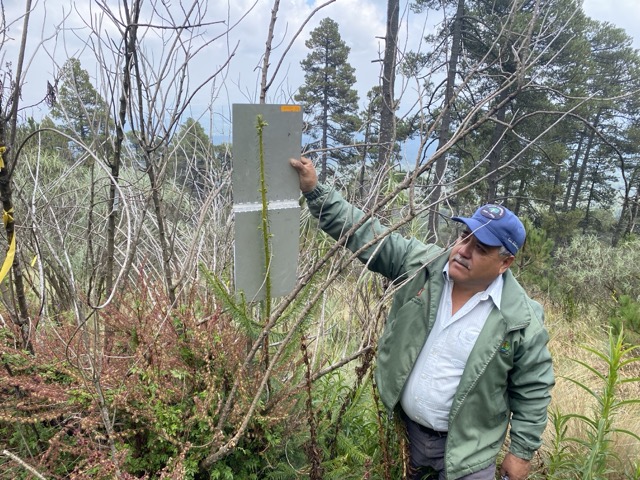
Assisted migration of Abies religiosa, planted at 3800 m of elevation, beyond its upper natural altitudinal limit, at Nevado de Toluca, State of México
Reforestation in the face of climate change

Reforestation guidelines for Abies religiosa and Pinus pseudostrobus in the face of climate change.

Photo: Assisted migration of Abies religiosa, planted at 3800 m of elevation, beyond its upper natural altitudinal limit, at Nevado de Toluca, State of México

Learn more

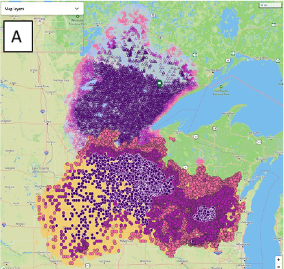
Climatically smart selection tool

The Climate Smart Restoration Tool is an interactive web application that helps land managers match seed sources to planting sites based on current and future climate conditions, aiding ecosystem restoration under climate change
Learn more

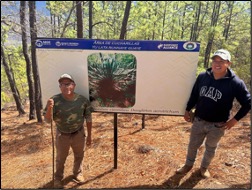
Second Conference of the North American Forest Genetics Society

Oaxaca city, Mexico
June 10-14,2024.

Learn more

    Working Group Members

    Nathalie Isabel
    Canadian Forest Service
    Natural Resources Canada
    Laurentian Forestry Centre
    nathalie.isabel@NRCan-RNCan.gc.ca
    Elizabeth Campbell
    Canadian Forest Service
    Natural Resources Canada
    elizabeth.campbell@nrcan-rncan.gc.ca
    Sally Aitken
    Department of Forest and Conservation Sciences
    University of British Columbia
    sally.aitken@ubc.ca
    Cuauhtémoc Sáenz-Romero
    Instituto de Investigaciones sobre los Recursos Naturales
    Universidad Michoacana de San Nicolás de Hidalgo
    cuauhtemoc.saenz@umich.mx
    J. Jesús Vargas-Hernández
    Postgrado en Ciencias Forestales
    Colegio de Postgraduados
    vargashj@colpos.mx
    Maria Teresa Flores Cabral
    Comisión Nacional de Áreas Naturales Protegidas (CONANP)
    teresa.flores@conafor.gob.mx
    Jessica W. Wright
    USDA Forest Service
    jessica.w.wright@usda.gov
    Bryce A. Richardson
    Rocky Mountain Research Station
    USDA Forest Service
    bryce.richardson2@usda.gov
    Dr. Marcus V. Warwell
    USDA Forest Service
    marcus.v.warwell@usda.gov